

About Jay's Fund
Jay's Fund was established in honor of Jeremy "Jay" Jackson II, a young man who spent much of his childhood in the foster care system and was one of the longest-served children in Advocates for Children's history (12 years). Jay tragically lost his life in a car accident on June 2, 2026, at just 19 years old.
Jay experienced three failed adoptions and aged out of the foster care system without the permanent family every child deserves. His story reflects the reality many older youth face as they navigate adolescence and adulthood without the support systems that most young people rely upon. Despite the obstacles he faced, he remained creative, kind, fiercely competitive, and determined to keep moving forward. He loved basketball, art, music, video games, and collecting athletic shoes.
What makes this fund especially meaningful is that it was created while Jay was still alive. He knew about the fund, supported the idea behind it, and was excited that his experiences could help other youth facing similar challenges. He wanted his journey to have purpose and hoped future young people would receive opportunities and support that were often difficult for him to find. He had no idea that the fund would one day become part of his legacy.
Jay's Fund provides direct support to older youth, ages 16 and up, who are involved in the child welfare system.
While many people think of young children when they think about foster care, older youth often face some of the greatest challenges. Many have experienced years of abuse, neglect, loss, placement disruptions, and trauma. Some have spent much of their childhood moving between homes, schools, residential facilities, and treatment programs. By the time they reach their teenage years, many have learned not to trust adults, even though what they want most is to be heard, valued, and supported.
Older youth are also the least likely to find permanent families. They are often expected to begin preparing for adulthood while still carrying the weight of experiences no child should have to endure. Many are trying to learn skills that most young adults take for granted, such as maintaining employment, managing money, obtaining a driver's license, securing housing, pursuing higher education, or building healthy support systems.
Jay's Fund helps bridge the gap between what traditional funding sources can provide and what older youth actually need to succeed. Donations may be used for driver's education, licensing fees, transportation needs, school activities, sports participation, musical programs, graduation expenses, work uniforms, interview clothing, shoes, technology, educational supplies, college dorm essentials, apartment deposits, utility hookups, furniture, household items, laundry costs, emergency housing assistance, and other needs that help young people move toward independence.
Sometimes the need is practical. Sometimes it is personal. A basketball camp, a senior trip, a yearbook, a pair of work boots, a laptop for college, or a security deposit may seem small, but those opportunities often help a young person feel included, confident, and hopeful about their future.
Every dollar donated to Jay's Fund goes directly toward supporting older youth as they build their futures, overcome barriers, and take the next steps toward adulthood. Through this fund, Jay's story continues to make a difference for young people who are still searching for stability, opportunity, and someone who believes in them.
Jay, Age 19
Why are older youth harder to place for adoption?
By the time a child reaches their teenage years in foster care, they may have experienced years of abuse, neglect, loss, instability, and broken relationships. Many have moved repeatedly, changed schools, lived in residential facilities, or had adults they trusted disappear from their lives.
That trauma does not disappear when a child enters a safe home.
Older youth may struggle with trust, attachment, anger, boundaries, or accepting authority. They may lie, withdraw, act out, push people away, or test a caregiver's commitment. These behaviors can be difficult, but they often developed as ways to survive experiences that happened long before the foster or adoptive family entered their lives.
Adoption can fail when families are not adequately prepared for the effects of long-term trauma, when expectations do not match the reality of parenting a teenager who has experienced significant loss, or when a family and child simply are not the right match.
There is another challenge that is easy to overlook. A teenager has a history. They have relationships, memories, opinions, loyalties, fears, habits, and a sense of who they are. They may desperately want a family while also being terrified to trust another one. After experiencing rejection or disrupted placements, allowing themselves to believe that another adult will stay can feel incredibly risky.
Jay experienced three failed adoptions. That does not mean Jay was a bad kid.
Jay had experienced significant trauma and instability throughout his childhood. At times, that trauma showed itself through behaviors that were difficult for adults to manage. With each new opportunity, Jay tested boundaries. In many ways, he was asking a question he had learned to ask very early in life. You say you love me, but will you still love me when I make it hard? Will you really stay?
And when an adoption failed, the answer seemed to confirm what he already feared. Adults leave. People give up. Love has limits.
Then another opportunity would come along, and the cycle would begin again. Each time, trusting the next person became a little harder. And with every failed placement, Jay was left to carry another loss.
For most of his childhood, the one adult relationship that remained constant was with his advocate. No matter how difficult things became, his advocate came back. Again and again, for 12 years. There was tremendous value in Jay knowing there was at least one person he could not scare away, frustrate away, or push away.
This is part of why advocacy for older youth matters so much. They need adults who can see beyond a behavior and ask what is behind it. They need someone willing to listen to what they want, take their experiences seriously, and keep showing up, especially when a young person is testing whether they really will.
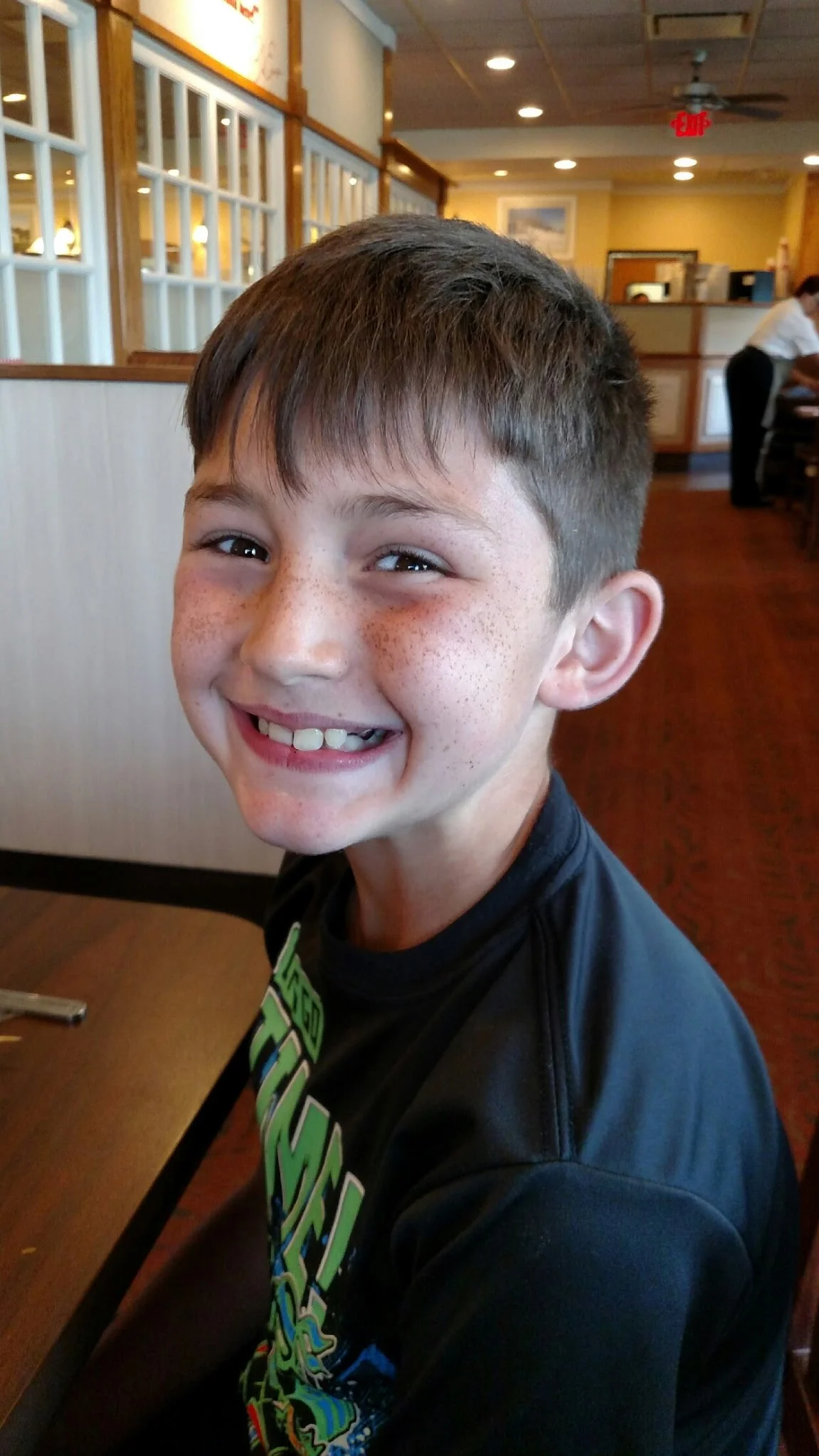
Jay, Age 7